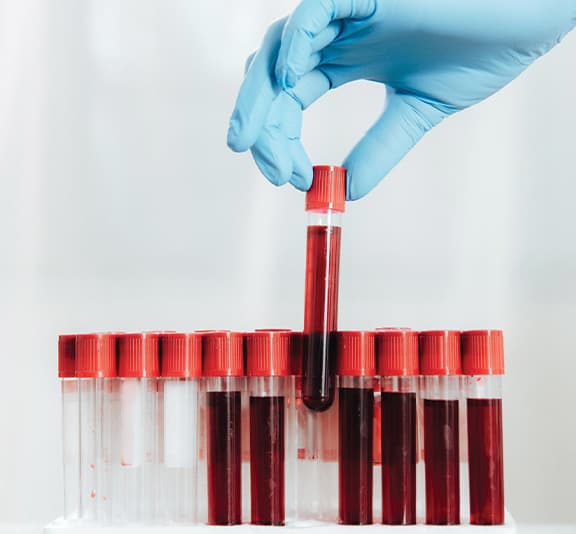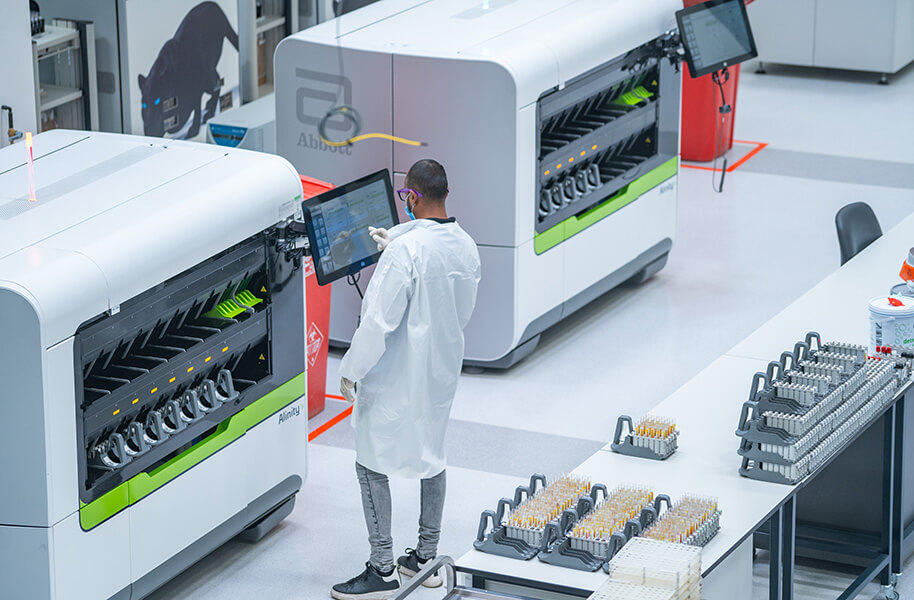

When receiving Once blood groups are verified, tests for various infectious
diseases are conducted, for example HIV/AIDS, Hepatitis B and C and
Syphilis. The result of the HIV test is not disclosed to the donor.
The commitment of our blood donors ensures the safety of the blood
supply. SANBS attempts to encourage donors to give blood for purely
altruistic reasons. People who participate in unsafe lifestyle
behaviour such casual sex, male-to-male sex or taking intravenous
drugs are advised not to donate blood.
Infected Blood
In order to protect a patient, blood is tested for various diseases
that may be transmitted through blood transfusion. Each unit of
donated blood is subjected to strict and rigorous testing and
processing procedures.
Wrong type
Cross matching is a testing system used to verify that the donor’s
blood is compatible to the patient’s. The red cells from the patient
are tested against the donors’ serum (plasma. Each unit is tested
at the Blood Banking Laboratory to ensure that a correct ABO and Rh
with no irregular antibodies blood to the patient is issued.
Blood tested during the HIV window period HIV is undetectable for a period of approximately two weeks (or
longer), known as the window period. However, SANBS uses the NAT
system that detects the HIV in 6 – 11 days from the day of
infection.
This will definitely ensure that every blood ready for transfusion
is of quality (virus-free).
Infection through equipment
All equipments used during the process of blood transfusion, for
example, needles, blood bags, tubes and finger prick needles are
new, sterile and disposable. These are used only once for your blood
donation and then placed in a specialised waste container and
incinerated.
Complications in relation to blood donations As a new donor you probably have questions or assumptions beyond
your reasoning on blood donation. To help you make a conscious
decision on your voluntary donation, we have indicated possible
complications that relate to blood donation.
You should refer to pre-donation tips to avoid some of
these complications.
None of the following complications is
permanent, it takes few minutes to few days to resolve. If any
complication occurs after donation, please inform the donor clinic
immediately. Further information may be obtained from donor staff at
your local donor clinic.
Blood donation is a process by which a blood donor has blood drawn
for storage in a blood bank or for subsequent use in a blood
transfusion.
The process of giving blood involves screening the donor, the actual
donation, and a brief recovery period.
Often donors are encouraged to sit down for few minutes after a
donation to return to normality, as lightheadedness and faintness
may occur.
Throughout the donation process and sometimes after, a donor may be
at risk of any of the following complications:
A. Immediate risks
1. Needle injuries
Minor discomfort due to finger
prick or needle insertion
Bruises or
haematomas where the blood was taken
Pain or paresthesia (pins and
needles) on the same arm
2. Vasovagal reactions
Nausea or vomiting.
Syncope (light-headedness,
dizziness or fainting, which can sometimes be due to a drop in
blood pressure)
Seizures (fits): a very rare
occurrence but, can happen especially if a donor is epileptic
B. Delayed risks
1. Needle injuries
Bruising of the arm may occur
days after a donation.
Numbness due to nerve damage
Thrombophlebitis (rare)
Needle phobia and severe
anxiety prior to donation
2. Anaemia or Iron deficiency
Some donors can become iron
deficient if they donate too frequently.
Female donors are more at risk
of developing iron deficiency and may be advised not to donate
more than four times per year.
Red blood cells are replaced by bone
marrow into the circulatory system within 3-5 weeks, and lost iron
replaced over 6-8 weeks. Due to the time frame required for iron
replacement, donors are eligible to donate whole blood approximately
eight weeks (± 56 days) after the previous donation.
Phlebotomists may sometimes experience difficulties in obtaining
enough blood from some donors because of unsuitable veins and this,
as well as faints, may sometimes necessitate cancellation of a
donation.
Donors are discouraged from heavy exercise or lifting until the next
day and, encouraged to drink lots of fluids after donating to
replenish blood volume.
Donor staff are trained to handle and stabilize donors if
complications occur and, to prevent further injuries like, falls
resulting in head injuries, dental injuries, fractures, cuts etc.