
New Donors   Where can I donate   l   Donors   l   Services   l   Media   l   About us   l   FAQs   l   Contact us    I   Home  

FAQ's


Frequently Asked Questions (FAQs)

What blood group is needed the most?
Group O blood is always in need. This is because it can be given to any patient in an emergency. One out of three people belong to Group O, so the chances of this blood group being used in hospital is much more than for any other blood group. Compare it to bread: if more people eat white bread than any other bread, then surely the supermarkets will have more white bread on their shelves, to cater for their customers’ needs. It’s a simple principle of supply and demand.

Why should people donate safe blood?
Safe blood saves lives. Every day, thousands of people would die if others did not donate their blood.

Can a unit of blood save more than one life?
Blood is composed of several different elements, namely red cells, plasma and platelets, each of which fulfils a particular function. These can be used for specific purposes so that each unit of blood can be used for more than one patient.

Does all donors’ blood get used to make components?
The more regularly you donate, the better the chance of your donated unit getting used for all components.

Why is this?
SANBS has found that its regular donors are its safest donors. These people are familiar with the danger of the window period and they know what risk behaviour entails. They have been through all SANBS’s education processes.

So how does it work then?
If you are donating blood for the first time, your red blood cells won’t get used. Your plasma gets quarantined until your next donation. If all tests come back negative after your second donation, the quarantined plasma from your first donation will be used.
This also applies if you haven’t donated blood for a while.
Once you have made three donations and your blood still tests negative for sexually transmissible diseases, all the components of your blood gets used. You have to donate blood regularly!

What is regular donation?
People can donate blood every 56 days. A regular donor is someone who has made three or more donations in a year.

Who receives blood?
Transfusions are given to:

  • Patients undergoing surgical operations
  • Patients with cancer or leukaemia
  • Children with severe anaemia
  • Accident victims
  • Women; to treat haemorrhage as a complication of pregnancy

What is safe blood?
Safe blood is blood that does no harm to the person who receives it. Safe blood can be life-saving, but contaminated blood, or blood that is transfused to the wrong patient, can cause serious illness or even death to the recipient.

Blood is unsafe if, at the time of the donation, any infection is present in the donor’s blood that can be transmitted by transfusion or through any blood products that have been incorrectly prepared or stored.

What infections can be transmitted by blood?

  • HIV, which leads to AIDS
  • Hepatitis B
  • Hepatitis C
  • Syphilis

Who should not give blood?
People who have or may recently have contracted a sexually transmitted disease such as HIV or syphilis, which can be passed on to a patient through their blood.
People whose lifestyle puts them at increased risk of contracting an infection that can be transmitted through their blood: for example, if they have had more than one sexual partner in the past six months, or if they have had sexual contact with someone whose sexual background is unknown to them.
People who have ever injected themselves with drugs.
People who want to have an AIDS test.

Who are the safest donors?
Voluntary, non-remunerated (unpaid) donors who give blood regularly are the safest blood donors. Research from many countries shows that people who give blood freely and without any financial reward have little reason to conceal information about their lifestyle that may make them unsuitable to give blood, either temporarily or permanently. Their primary motivation is to help other people and not to obtain any personal benefit, except the satisfaction of knowing they have helped to save someone’s life.
The life of every person who receives blood depends on the honesty of the individual donors who have given their blood.

Isn’t the blood tested?
Even though every single unit of blood donated undergoes sophisticated testing for transmissible diseases, there is still a window period when the presence of HIV in the blood cannot be detected through testing. A person may be infected with HIV without knowing it and it is for this reason that we ask that any person who has taken part in risk behaviour not to donate blood.

What tests do SANBS use?
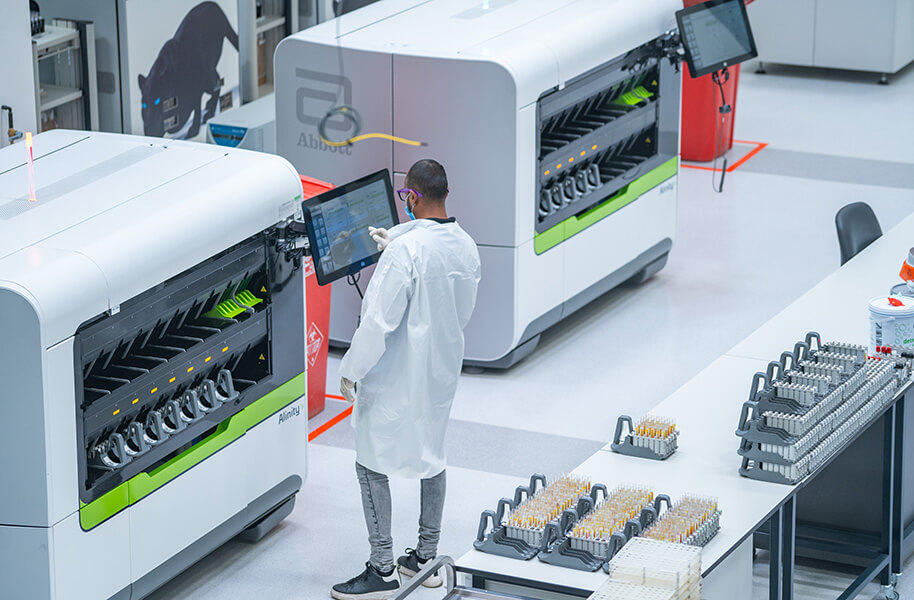
Since the inception of its new risk model in October 2005, SANBS is conducting Nucleic acid Amplification Technology (NAT) tests on every unit of blood that is donated. This is a very sensitive test, which detects the presence of the HI-virus, Hepatitis B, Hepatitis C and syphilis in blood. However, there is still the danger of the window-period which no test in the world can detect.
SANBS is the first country in the world to have implemented NAT testing on such a large scale for individual testing of blood.

Do you test blood at random?
No. With every donation, your blood gets tested. So, if you have donated blood for the 300th time, your blood still gets tested every time after you’ve donated.

How safe is it to donate blood?
As a donor, you have to complete a Self Exclusion Questionnaire, with questions on your health and lifestyle. The questions are asked to ensure that it is safe for you to donate blood and that your blood is safe for a patient to receive.
A fingerprick test will also be done to check your iron levels. Your blood pressure will also be measured, to ensure you are fit to donate.

Can you get AIDS from donating blood?
No, absolutely not. All needles and finger-prick lancets are sterile and used once only. After use, each lancet and needle is placed in a special medical-waste container and incinerated.
Trained staff are employed to collect all blood donations and strict protocols are followed. There has never been an incident in which a blood donor has contracted HIV from donating blood.

Some patients do have the option of using their own blood. This is called Autologous Donation and must be discussed with their doctor 4-5 weeks before the scheduled surgery. Prior to the operation blood is collected from the patient, tested and held in special storage. It is then available for transfusion during or following the surgery, should the need arise.

Who qualifies to become a blood donor?
If you are between the ages of 16 and 65, weigh more than 50 kgs and lead a sexually safe lifestyle, you can come to a clinic and register as a blood donor.

Where are clinics held?
Call SANBS Toll Free number: 0800 11 90 31