
New Donors   Where can I donate   l   Donors   l   Services   l   Media   l   About us   l   FAQs   l   Contact us    I   Home  

Media
Media Contacts
Press Releases
In the News
 FAQs
Resource Centre
Publications
Good News Stories


Fact Sheet

The mission of the South African National Blood Service (SANBS), an association of voluntary, non-remunerated blood donors, is to provide all patients with sufficient, safe, quality blood and blood products and medical services related to blood transfusion in an equitable and cost effective manner.

  • SANBS is a section 21, not for profit organisation.
  • SANBS operates under licence from the Department of Health, but is not state-owned and therefore does not receive funds from government.
  • There are two blood transfusion services in South Africa – SANBS and the Western Province Blood Transfusion Service (WPBTS).
  • SANBS operates in eight of the nine provinces, except for the Western Cape, which falls under the WPBTS.
  • The operational area is divided into seven zones, namely the Eastern Cape, Egoli, Free State/Northern Cape, Kwazulu-Natal, Vaal and Northern.
  • There are 87 permanent donor centres within the SANBS region and 65 mobile teams that run mobile clinics at schools, tertiary institutions, businesses, community centres, shopping centres and holiday venues.
  • 3 000 units of blood must be collected every day.
  • Blood donors can donate blood every 56 days.
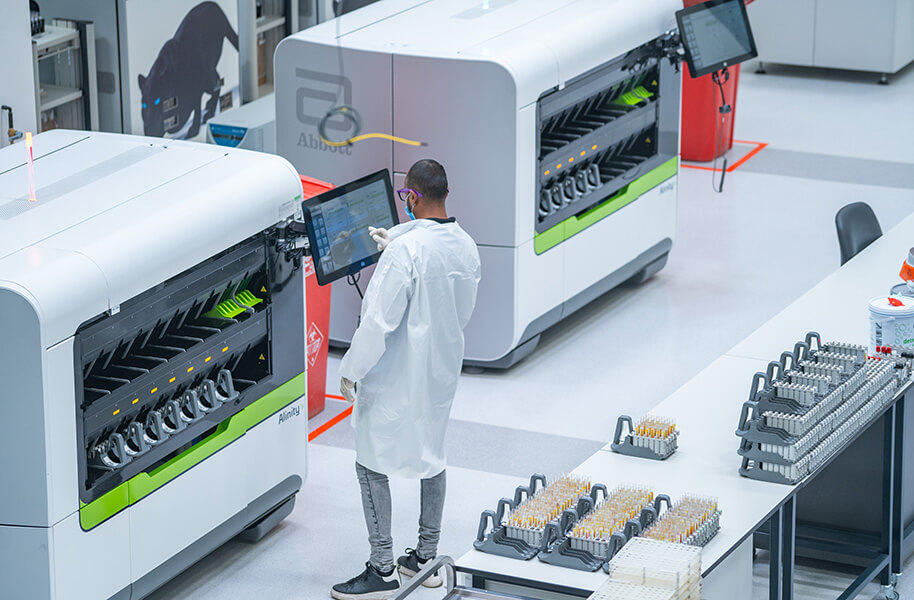
  • Every unit of blood goes through rigorous testing after collection for sexually transmissible diseases including HIV, Hepatitis B and C and syphilis.
  • SANBS is using the most sophisticated testing equipment, namely Nucleic Acid Amplification Testing (NAT) to test its blood.
  • South Africa is the first and only country in the world to do individual NAT testing on every unit of blood on such a large scale.
  • The most needed blood group is O. This is because group O blood can be given to any patient in an emergency.
  • 777 000 units of blood are needed annually.
  • In South Africa a blood transfusion takes place every 48 seconds.
  • Less than 1% of the South African population donates blood regularly.
  • There is no substitute for human blood.
  • 62.37% of blood is donated by men and 37.63% by women.
  • Whole blood can be kept for 21 days.
  • Red cells can be kept for 35 days.
  • Blood can be divided into three components, namely red cells, plasma and platelets.
  • Plasma can be kept for 12 months when frozen.
  • Platelets (can be kept for only five days.
  • Blood is mainly used for:
    • Medical cases - 27%
    • Childbirth & Gynaecological cases - 26%
    • Surgical cases - 21%
    • Paediatric cases - 10%
    • Orthopaedic cases - 6%
    • Research / Laboratory - 6%
    • Casualty - 4%
  • SANBS is accredited with the South African Accreditation System (SANAS).
  • The requirements for becoming a blood donor are:
  • Weigh 50kg or more;
  • Be between the ages of 16 and 65; and
  • Lead a sexually safe lifestyle.

For more information, please contact
SANBS toll free on 0800 11 90 31
.